Products 1-12 of 12
Show
Availability: In Stock
Item #: AGRBL -
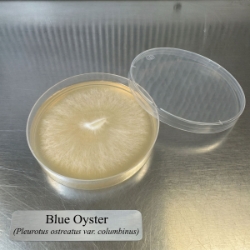
Blue Oyster is the culture we point beginners to first. It grows fast, shrugs off small mistakes and fruits in cooler rooms where many oysters stall. This plate holds a first-generation isolate of Pleurotus ostreatus var. columbinus, grown out on malt extract agar and ready to transfer. P. ostreatusSpecies
7–10 daysTo cover a plate
45–65°FFruiting temp
BeginnerSkill level
8–10Plates from one Why start with our Blue Oyster plate Speed on your side
The mycelium runs so quickly that it tends to...
Availability: In Stock
Item #: AGRCH -
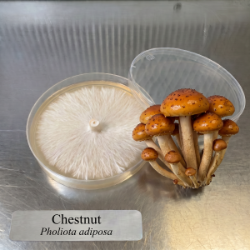
Chestnut (Pholiota adiposa, sometimes called Fat Pholiota) grows in clusters of glossy orange-brown caps on long, pale stems. It's common in European and East Asian markets but still hard to find in the US, which makes it a strong specialty crop. P. adiposaSpecies
10–16 daysTo cover a plate
55–65°FFruiting temp
IntermediateSkill level
8–10Plates from one Why start with our Chestnut plate Holds its texture
Stays firm, with a slight crunch, in soups, stir-fries and ramen. Nutty and earthy
A mild...
Availability: In Stock
Item #: AGRCD -
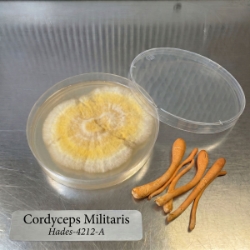
Hades 4212-A is a production strain of Cordyceps militaris, chosen for heavy, consistent fruiting of bright orange clubs. Cordyceps doesn't follow the usual grain-to-bulk path, so this plate is the starting point for jar or tray grows on supplemented rice. C. militarisSpecies
Hades 4212-AStrain
10–14 daysTo cover a plate
65–68°FFruiting temp
60–90 daysPlate to harvest Why start with our Cordyceps plate Selected for output
Picked for vigorous, upright orange fruit bodies that typically stand...
Availability: In Stock
Item #: AGRYL -
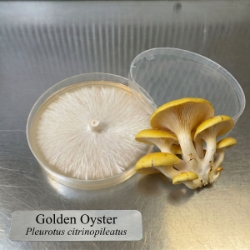
Golden Oyster, also sold as Yellow Oyster or tamogitake, fruits in tight bouquets of canary-yellow caps. It's a warm-weather grower that colonizes quickly and fruits easily, which makes it one of the most rewarding cultures to start with. P. citrinopileatusSpecies
5–8 daysTo cover a plate
65–80°FFruiting temp
BeginnerSkill level
8–10Plates from one Why start with our Golden Oyster plate Quick to colonize
Covers a plate in 5–8 days at 75–80°F and finishes grain in about 7–12. Warm-room...
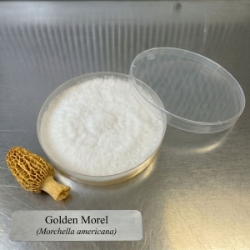
Availability: In Stock
Item #: GMCA -
Read this first: Morels are among the hardest mushrooms to fruit on purpose. Indoor fruiting is extremely difficult even for commercial operations, and an outdoor bed may take 2–4 years to produce, or may never fruit. This culture suits experienced growers, research and outdoor experiments. It isn't a good first culture or gift. We isolated this culture from a fresh golden morel found in native Illinois hardwood forest, then stabilized it in our lab. It belongs to the yellow morel group and is...
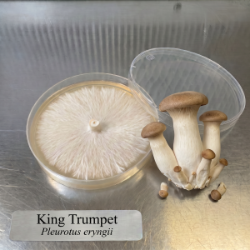
Availability: In Stock
Item #: AGRKT -
King Trumpet, also called King Oyster, King Brown or French Horn, is grown for its stem: thick, white and 2–6 in tall under a small tan cap. Sliced into rounds it stands in for scallops, and shredded it makes a pulled-meat substitute. P. eryngiiSpecies
7–12 daysTo cover a plate
55–65°FFruiting temp
IntermediateSkill level
8–10Plates from one Why start with our King Trumpet plate Kitchen favorite
Firm, meaty stems that keep 7–10 days in the fridge after harvest. Sawdust, not straw
Fruits on...
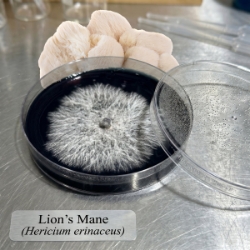
Availability: In Stock
Item #: AGRLM -
Lion's Mane mycelium is pure white, which makes it hard to read on ordinary amber agar. We grow this culture on black agar instead, so every strand stands out and contamination shows up right away. It's a first-generation isolate from our master culture, ready to move to grain, liquid culture or fresh plates. H. erinaceusSpecies
Black agarMedium
10–14 daysTo cover a plate
60–70°FFruiting temp
5–10Plates from one Why start with our Lion's Mane plate Easy to read
White growth against black makes...
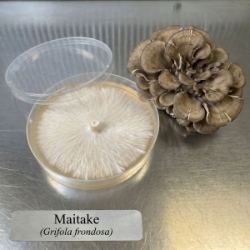
Availability: In Stock
Item #: AGRMT -
Maitake, or Hen of the Woods, is a project for growers whose technique is already clean. It grows slowly and won't outrun contamination for you, but a healthy block can produce a single rosette of gray-brown fronds weighing 4–8 lb. G. frondosaSpecies
21–28 daysTo cover a plate
55–65°FFruiting temp
AdvancedSkill level
4–6Plates from one Why start with our Maitake plate Big payoff
Mature rosettes can reach 4–8 lb from one fruiting. Oak lover
Prefers supplemented oak sawdust and also runs on...
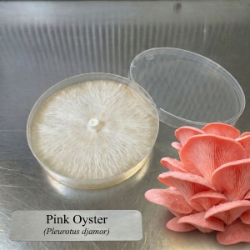
Availability: In Stock
Item #: AGRPK -
Pink Oyster is the heat lover of the oyster family. When summer temperatures stall most gourmet species, Pleurotus djamor keeps fruiting in bright coral-pink clusters. It's also the fastest culture we offer on agar, often covering a plate in under a week. P. djamorSpecies
5–7 daysTo cover a plate
65–80°FFruiting temp
BeginnerSkill level
8–10Plates from one Why start with our Pink Oyster plate Fast off the plate
At 75–80°F it can colonize agar in 5–7 days and grain in about 7–12. Summer...
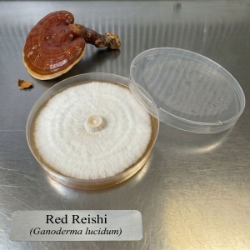
Availability: In Stock
Item #: AGRRS -
This is true Ganoderma lucidum, not one of the look-alike species often sold under the Reishi name, such as G. sessile, G. resinaceum or G. tsugae. It produces the classic lacquered red-to-mahogany conk with a white growing edge, and it likes warmth. G. lucidumSpecies
14–21 daysTo cover a plate
75–85°FFruiting temp
IntermediateSkill level
5–8Plates from one Why start with our Red Reishi plate The real species
Our master culture is G. lucidum, so you know exactly what you're expanding. Shape on...
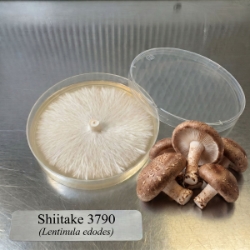
Availability: In Stock
Item #: AGRSH -
Strain 3790 is a widely grown commercial shiitake, developed for supplemented sawdust blocks. This plate carries a first-generation isolate of that line, so you can expand it onto grain, run it straight into sawdust or bank it for later. L. edodesSpecies
Strain 3790Genetics
14–21 daysTo cover a plate
50–70°FFruiting temp
5–8Plates from one Why start with our Shiitake 3790 plate Built for blocks
Selected for supplemented sawdust production, and it also runs well on oak, sugar maple and beech...
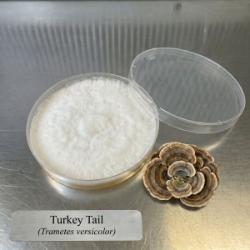
Availability: In Stock
Item #: TTCA -
Turkey Tail grows thin, leathery fans banded in brown, tan, gray, blue and orange. Foraged specimens are easy to confuse with look-alikes such as Stereum ostrea and Trichaptum biforme. Starting from an isolated culture takes that guesswork out. T. versicolorSpecies
10–14 daysTo cover a plate
60–75°FFruiting temp
BeginnerSkill level
6–8Plates from one Why start with our Turkey Tail plate Easy for a functional
One of the most forgiving functional species to grow, and one of the most resistant to...