Products 49-56 of 56
Show

Availability: In Stock
Myco Labs
Item #: ABM10 -
Our ABM is a first-generation Agaricus blazei murrill isolate, the almond mushroom from the Piedade region of Brazil. It's a close relative of the Portobello and grows by similar methods, but it carries a sweet, marzipan-like aroma no other mushroom we sell can match. A. blazeiSpecies G1Isolated genetics ~18 daysColonization 68–70°FFruiting temp IntermediateDifficulty Why grow our ABM culture The almond mushroom A sweet, marzipan-like aroma that gets stronger as it dries, which is why most...
Availability: In Stock
Myco Labs
Item #: BRB10 -
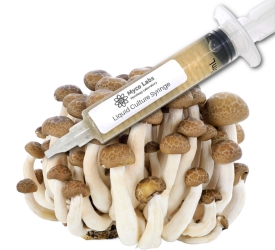
Our Brown Beech is a first-generation Hypsizygus tessellatus isolate, the buna-shimeji. It grows in tight clusters of small marbled-tan caps on firm stems that stay crisp through cooking, and it fruits colder than anything else we carry. H. tessellatusSpecies G1Isolated genetics ~18 daysColonization 45–65°FFruiting temp IntermediateDifficulty Why grow our Brown Beech culture A texture mushroom Small caps and firm stems that keep their bite in stir-fries, clear soups and pan sauces instead of...

Availability: In Stock
Myco Labs
Item #: CWL10 -
Our Chicken of the Woods is a first-generation Laetiporus isolate, the sulfur-yellow to orange bracket fungus that's one of the most recognizable mushrooms in North America. Harvested young, its dense, fibrous flesh is one of the few that truly works as a whole-cut meat substitute. LaetiporusSpecies G1Isolated genetics ~18 daysColonization 67–76°FFruiting temp IntermediateDifficulty Why grow our Chicken of the Woods culture A showstopper flush Broad, overlapping brackets in sulfur-yellow to...

Availability: In Stock
Myco Labs
Item #: GMLC -
Our Golden Morel was cloned in May from a vigorous wild fruiting body found near our Illinois lab, then isolated in-house. It's the most aggressive morel strain we've worked with, and because it came from a cold-winter region, it's already adapted to the seasonal cycle morels need. Like every morel, it's an outdoor-bed project, not an indoor crop. Wild cloneLocal Illinois strain G1Isolated genetics 12–21 daysGrain colonization Outdoor bedsMethod ExpertDifficulty Why grow our Golden Morel...
Availability: In Stock
Myco Labs
Item #: KNLC -
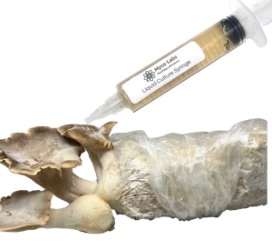
Our King Trumpet is a first-generation Pleurotus eryngii isolate, the largest oyster species and the only one grown for its stem. It forms thick, dense white stems topped with small tan caps, and a well-grown fruit can top two pounds. P. eryngiiSpecies G1Isolated genetics ~12 daysColonization 55–69°FFruiting temp IntermediateDifficulty Why grow our King Trumpet culture Grown for the stem Thick white stems with a scallop-like texture. Sliced into rounds and seared, it's the most convincing meat...
Availability: In Stock
Myco Labs
Item #: LIP10 -
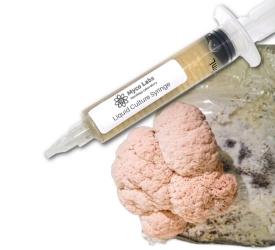
Our Pink Lion's Mane is a wild-cloned Hericium erinaceus that we isolated for one trait: a soft rose blush on the fruit bodies. It grows exactly like standard Lion's Mane, with the same cascading spines, hardwood appetite and fast colonization, and we run it in limited batches. H. erinaceusSpecies G1Wild clone ~10 daysColonization 50–75°FFruiting temp BeginnerDifficulty Why grow our Pink Lion's Mane culture A collector's culture Pink-tinted Lion's Mane is rare. Most growers have never seen...
Availability: In Stock
Myco Labs
Item #: EN10 -
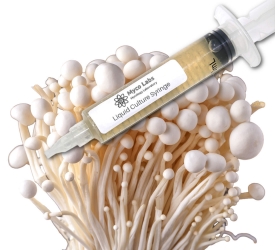
Our White Enoki is a first-generation isolate of a white Flammulina velutipes cultivar selected for small caps and long, pale stems. It colonizes in about ten days, then asks for something no other species does: you shape the fruit yourself with cold, darkness and trapped CO2. F. velutipesSpecies G1Isolated genetics ~10 daysColonization 50–75°FFruiting temp AdvancedDifficulty Why grow our White Enoki culture Fast to colonize About ten days on grain, one of the quickest cultures in our lineup....

Availability: In Stock
Myco Labs
Item #: YRL10 -
Our Yellow Reishi is a first-generation Ganoderma curtisii isolate, a Reishi native to the southeastern United States rather than Asia. It forms kidney-shaped caps banded in gold and amber, and it's the rarest Ganoderma we carry. G. curtisiiSpecies G1Isolated genetics 18–21 daysColonization 65–75°FFruiting temp IntermediateDifficulty Why grow our Yellow Reishi culture A native American Reishi A separate species from the Asian Red Reishi, found wild across the Southeast and rarely cultivated....